
Pregnancy is a crucial time when your nutritional choices directly support your baby’s growth and development. A balanced diet rich in essential nutrients helps promote healthy brain development, strong bones, proper organ formation, and a healthy birth weight.
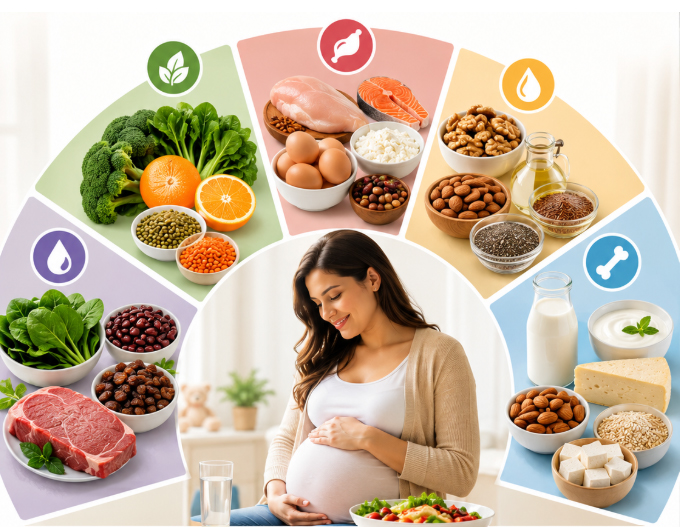
Essential Nutrients for a Healthy Pregnancy
Protein for Growth and Development
Protein helps build your baby’s muscles, organs, skin, and tissues.
Best sources:
- Eggs
- Lean meat and chicken
- Dairy products
- Lentils, beans, and chickpeas
Folic Acid for Brain and Spine Development
Folic acid is essential during early pregnancy and helps reduce the risk of neural tube defects.
Foods rich in folate:
- Spinach and leafy greens
- Broccoli
- Citrus fruits
- Beans and lentils
- Fortified cereals
Iron for Healthy Blood Supply
Iron supports increased blood production during pregnancy and helps deliver oxygen to your baby.
Iron-rich foods:
- Green leafy vegetables
- Lean meats
- Dates and raisins
- Beans and legumes
Pair iron-rich foods with vitamin C-rich fruits like oranges or guava for better absorption.
Calcium and Vitamin D for Strong Bones
These nutrients support the development of your baby’s bones and teeth.
Good sources:
- Milk, yogurt, and cheese
- Ragi
- Almonds
- Tofu
- Fortified foods
Healthy Fats for Brain Development
Omega-3 fatty acids contribute to healthy brain and eye development.
Healthy options:
- Walnuts
- Flaxseeds
- Chia seeds
- Doctor-approved low-mercury fish
What Should a Healthy Pregnancy Meal Include?
A balanced pregnancy plate should contain:
- Plenty of fruits and vegetables
- Whole grains such as oats or brown rice
- Protein-rich foods
- Dairy or calcium-rich alternatives
- Adequate water intake
Eating smaller, frequent meals may also help reduce nausea and acidity.
Foods to Avoid During Pregnancy
To protect both mother and baby, avoid:
- Alcohol
- Raw or undercooked meat, fish, and eggs
- Unpasteurized dairy products
- Excess caffeine
- Highly processed foods high in sugar and salt