
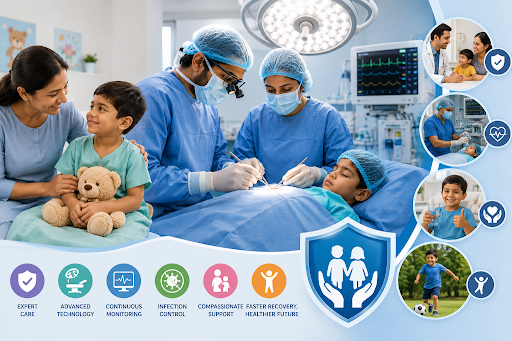
Hearing that your child may need surgery can be overwhelming for any parent. A common concern is whether pediatric surgery is safe. The reassuring answer is yes. With modern surgical techniques, advanced anesthesia, specialized pediatric surgeons, and dedicated children’s healthcare teams, pediatric surgery is safer today than ever before. Early diagnosis and timely treatment often lead to better outcomes and faster recovery.
Why Is Pediatric Surgery Different?
Children’s bodies are still growing, and they have unique medical needs. Pediatric surgeons are specially trained to diagnose and treat surgical conditions in newborns, infants, children, and adolescents.
They work closely with pediatric anesthesiologists, nurses, and intensive care specialists to provide safe, child-focused care throughout the surgical journey.
How Is Your Child’s Safety Ensured During Surgery?
Several measures are taken to maximize your child’s safety before, during, and after surgery:
- Thorough pre-operative evaluation and investigations.
- Safe anesthesia administered by pediatric anesthesiologists.
- Continuous monitoring of heart rate, blood pressure, oxygen levels, and breathing.
- Strict infection control and sterile surgical techniques.
- Close monitoring during recovery until your child is stable.
These protocols significantly reduce surgical risks and improve recovery.
Are There Any Risks?
Like any medical procedure, pediatric surgery carries some risks. These may include:
- Bleeding
- Infection
- Reactions to anesthesia
- Delayed wound healing (in some cases)
However, serious complications are uncommon, especially when surgery is performed by an experienced pediatric surgical team. For many conditions, delaying surgery may carry greater risks than the procedure itself.
How Can Parents Prepare Their Child?
Parents play an important role in ensuring a smooth surgical experience.
- Follow fasting instructions carefully.
- Inform your surgeon about allergies or medications.
- Reassure your child in simple, age-appropriate language.
- Follow all post-operative care instructions after discharge.
Good preparation helps reduce anxiety and supports faster recovery.
When Should You Consult a Pediatric Surgeon?
Seek expert advice if your child has:
- A congenital birth defect requiring surgery.
- Persistent swelling or lumps.
- Hernia.
- Undescended testis.
- Recurrent urinary tract problems.
- Any condition where surgery has been recommended.
Early consultation allows timely diagnosis and the most appropriate treatment plan.
Expert Advice from a Pediatric Surgeon
Pediatric surgery is performed using carefully planned protocols designed specifically for children. Many procedures today can be done using minimally invasive (laparoscopic) techniques, resulting in smaller incisions, less pain, shorter hospital stays, and quicker recovery. Your pediatric surgeon will explain the procedure, benefits, potential risks, and expected recovery before surgery, helping you make an informed decision.
Conclusion
Pediatric surgery is generally very safe when performed by trained specialists in an appropriate healthcare setting. Modern technology, specialized anesthesia, and experienced pediatric surgical teams ensure the highest standards of safety. If your child requires surgery, timely consultation and proper treatment can help them recover quickly and lead a healthy, active life.