

What is Appendicitis?
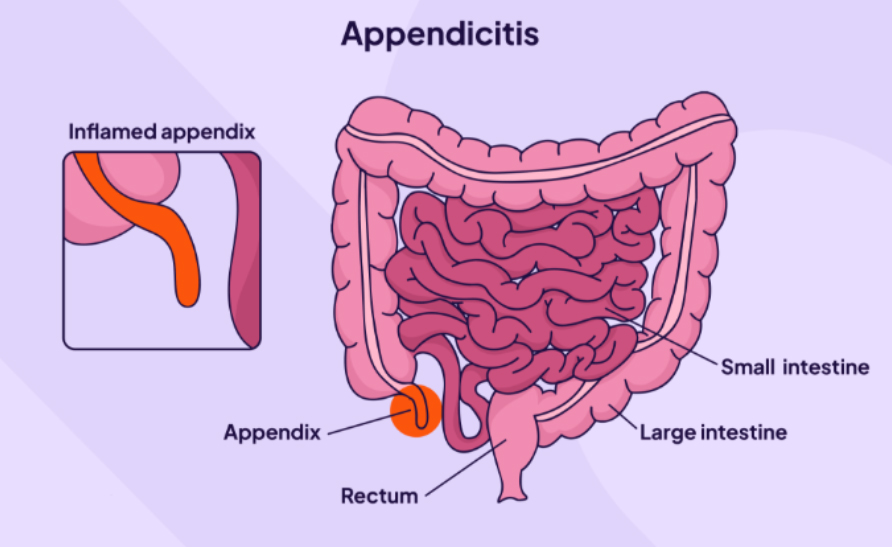
Appendicitis happens when the appendix (a small pouch attached to the intestine) becomes blocked, swollen, and infected. Without treatment, it can burst, spreading infection inside the abdomen.
Important Symptoms Parents Must Watch
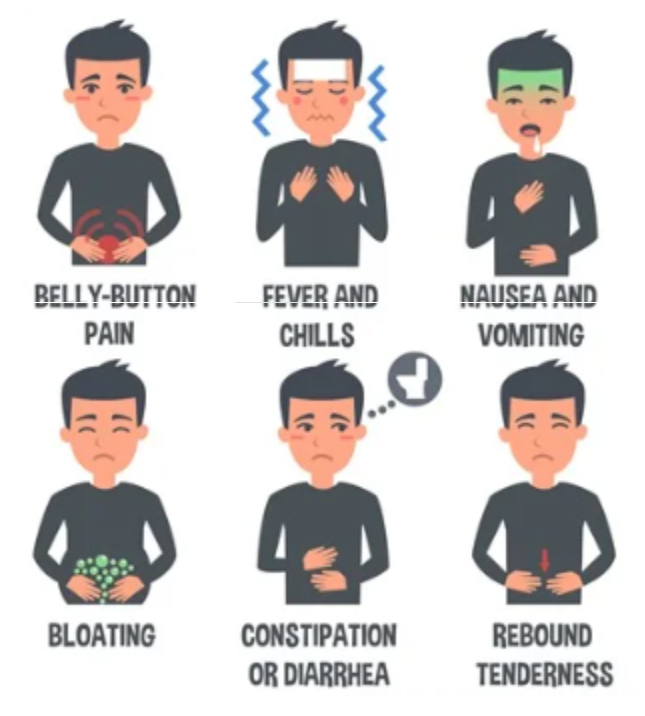
The signs of appendicitis can vary with age, but a few patterns are typical. Pain usually follows a pattern, though it can vary.
Typical Pain Pattern
- Starts near or at the belly button
- Moves to the lower right abdomen
- Becomes sharp and severe with time
- Worsens with walking, coughing, or jumping
Other Red Flags
- Loss of appetite
- Nausea or vomiting
- Fever
- Swollen or hard tummy
- Constipation or diarrhea
- Irritability, unusual tiredness
- Younger kids may refuse to walk or eat
If pain is persistent or increasing, don’t ignore it.
Why Early Diagnosis is Critical
Delay can cause rupture (burst appendix), leading to:
- Peritonitis – serious abdominal infection
- Abscess – collection of pus
- Longer hospital stay
- More complex treatment
Early care often means simpler surgery and quicker healing.
Doctors typically diagnose appendicitis through a physical examination, blood tests, and imaging such as ultrasound or CT scan. Pediatric surgeons are trained to identify subtle signs, even when symptoms are not textbook. They are skilled at catching even unclear or early signs.
The Treatment – Appendectomy
The infected appendix is removed surgically. The good news?
The appendix is not essential, and children live completely normal lives without it.
Types of Surgery
1. Laparoscopic (Minimally Invasive)
- Tiny cuts
- Less pain
- Small scars
- Faster recovery
2. Open Surgery
- Needed in ruptured or complicated cases
- Helps clean infection thoroughly
Antibiotics are given to control infection.
Recovery—What Parents Can Expect
Most children recover surprisingly quickly. In uncomplicated cases, they may go home within a day or two and return to school in about a week. Strenuous activity and sports are usually restricted for a few weeks, depending on the surgeon’s advice. Parents should monitor the incision site, ensure medications are taken properly, and report fever, pain, or discharge from surgical site.
What Families Should Know
Hearing that your child needs surgery can be frightening, but appendectomy is a routine, highly successful procedure. With timely care, the vast majority of children heal completely and return to their normal, energetic selves very soon.
If abdominal pain seems unusual, persistent, or severe, trusting your instincts and seeking medical help early can make all the difference.