
Hypospadias Repair: Understanding the Condition and Its Treatment
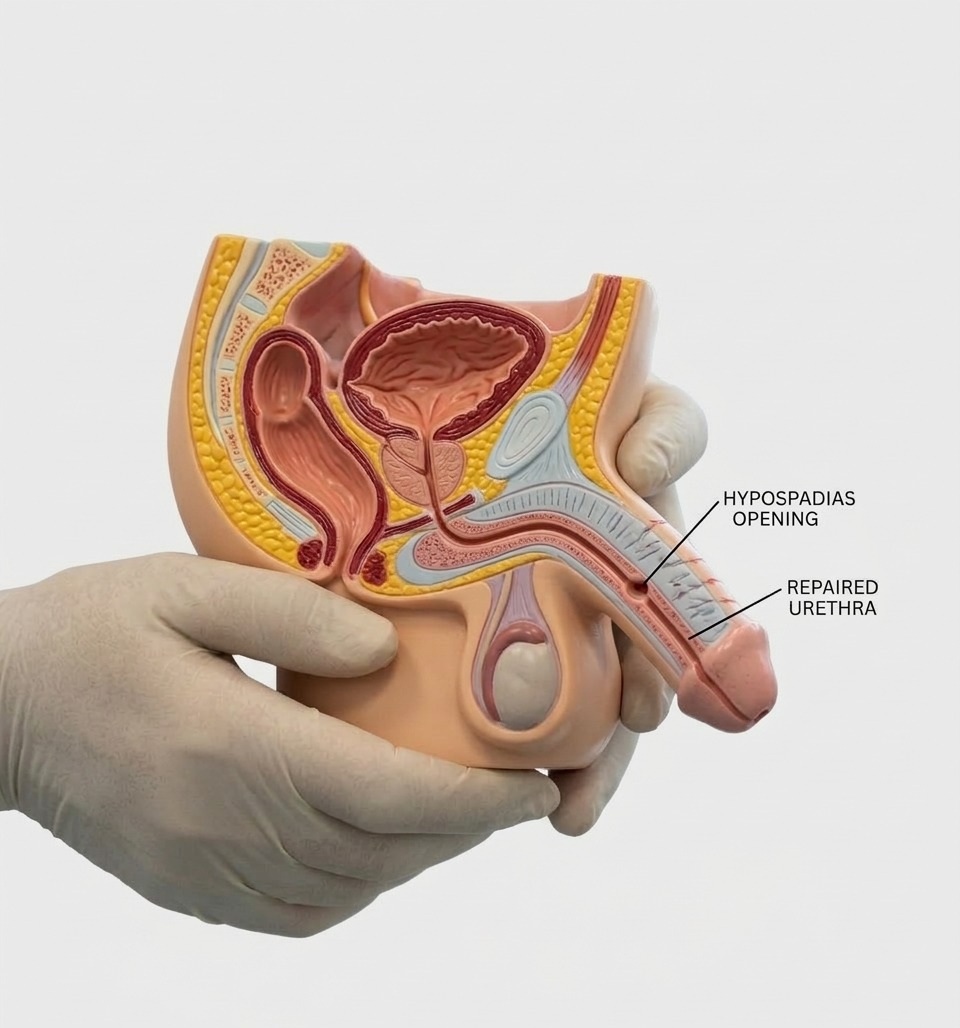
Hypospadias is a common congenital surgical problem of boys in which the opening of the urethra (the tube that carries urine out of the body) is located on the underside of the penis instead of at the tip. This occurs before birth when the urethra and foreskin do not develop normally during fetal development. The severity of hypospadias varies depending on the position of the urethral opening and curvature of penis.
Types of Hypospadias
Hypospadias is classified based on the location of the urethral opening:
- Distal Hypospadias: Opening is near the head of the penis and is the most common type.
- Mid Penile Hypospadias: Opening is located along the shaft of the penis.
- Proximal Hypospadias: Opening is near the base of the penis, on scrotum or in perineum and is considered most severe.
Some children may also have associated conditions such as a downward curvature of the penis (chordee) or an incomplete foreskin that gives a hooded appearance.
Symptoms of Hypospadias
Common signs of hypospadias include:
- Urethral opening on the underside of the penis
- Curved penis during erection (chordee)
- Hooded or incomplete foreskin
- Spraying or abnormal urine stream
- Rarely difficulty in urinating especially when urethral opening is narrow
Hypospadias is usually diagnosed shortly after birth during the newborn physical examination.
Causes and Risk Factors
The exact cause of hypospadias is not always known, but several factors may contribute to its development:
- Genetic factors
- Hormonal influences during pregnancy
- Family history of hypospadias
- Maternal age over 35
- Exposure to certain environmental factors during pregnancy
Diagnosis
Hypospadias is typically diagnosed during the newborn examination by a pediatrician. In moderate to severe cases, a pediatric surgeon or pediatric urologist may perform additional evaluation to determine the type and severity of the condition.
Additional tests are rarely required unless other congenital abnormalities are suspected.
Hypospadias Repair
Hypospadias Repair is a surgical procedure performed to correct the position of the urethral opening and reconstruct the urethra. The goals of the surgery are to create a urethral opening at the tip of the penis, straighten the penis if curvature is present, and improve both function and appearance.
Doctors usually recommend performing the surgery before child starts formal education at school which is usually at 4 years of age.
Surgical Procedure
The child may require one or multiple surgeries for repair of hypospadias which are performed under general anaesthesia. During surgery, the surgeon reconstructs the urethra using local tissue and corrects any curvature of the penis. In many cases, the repair can be completed in a single surgery, although more severe cases may require staged procedures.
Recovery and Outlook
After surgery, a small catheter or stent may be placed temporarily to help urine drain while the urethra heals. Mild swelling and discomfort are normal for a few days. Parents are advised to keep the surgical area clean, give prescribed medications, and attend follow-up visits.
With timely surgical repair, most children achieve normal urinary function and good cosmetic results. Early evaluation and treatment by a pediatric surgeon help ensure the best possible outcome.