
What are Liver Tumors?
The liver is one of the largest and most important organs in the body. It helps digest food, stores nutrients, removes toxins, and produces proteins that are essential for normal growth and development.
A liver tumor develops when liver cells begin growing abnormally, forming a lump or mass. Although liver tumors are rare in children, they can occur at any age, including infancy. Not every liver tumor is cancerous. Some are harmless and may only require observation, while others need surgery, chemotherapy, or a combination of treatments. Identifying the exact type of tumor is the first step toward successful management.
Benign vs Malignant Liver Tumors
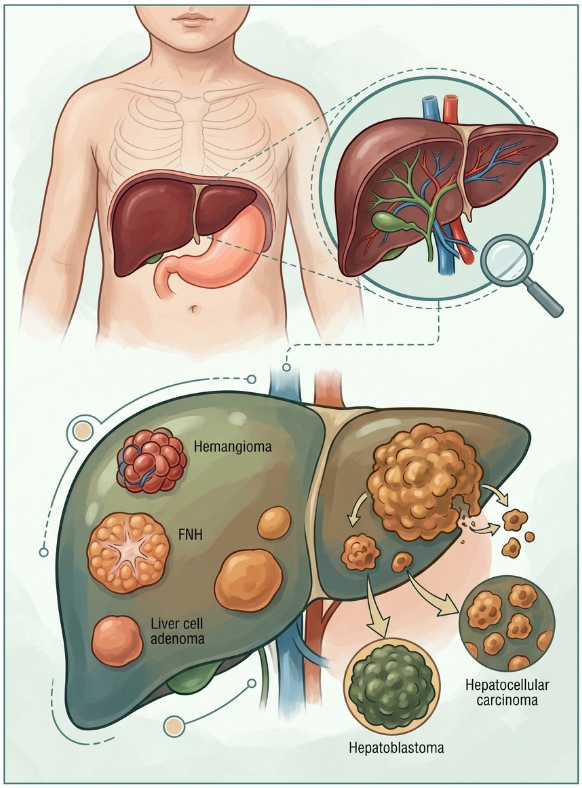 Liver tumors are broadly classified into two categories.
- Benign Liver Tumors: Benign tumors do not spread to other organs and often grow slowly. Depending on their size and symptoms, some may simply be monitored with regular follow-up. Examples include:
- Infantile hepatic hemangioma
- Focal nodular hyperplasia
- Mesenchymal hamartoma
- Hepatic adenoma (rare in children)
- Malignant Liver Tumors: Malignant tumors are cancerous and require prompt treatment. The most common malignant liver tumors in children include:
- Hepatoblastoma: The most common malignant liver tumor in young children, hepatoblastoma usually occurs in children under 3 years of age and often responds well to a combination of chemotherapy and surgery when diagnosed early.
- Hepatocellular carcinoma (HCC): Hepatocellular carcinoma is a rare but aggressive liver cancer in children, typically seen in older children or those with underlying liver disease, and treatment may involve surgery, chemotherapy, or liver transplantation depending on the stage of the disease.
Advances in pediatric surgery, chemotherapy, and multidisciplinary care have significantly improved survival rates for many children diagnosed with liver cancer.
Symptoms of Liver Tumors
The symptoms vary depending on the size and type of the tumor. Some children may not have noticeable symptoms in the early stages.
Parents should watch for:
- A lump or swelling in the upper abdomen
- Persistent abdominal pain
- Loss of appetite
- Unexplained weight loss
- Fever without a clear cause
- Nausea or vomiting
- Fatigue or reduced activity
- Yellowing of the skin or eyes (jaundice)
- Enlarged liver
- Abdominal fullness
These symptoms do not always indicate a liver tumor, but they should always be evaluated by a pediatric specialist.
When Should You Consult a Pediatric Surgeon?
A consultation is recommended if your child has:
- A persistent abdominal lump
- Recurrent or unexplained abdominal pain
- An enlarged liver noticed during examination
- Unexplained weight loss
- Persistent jaundice
- Abnormal liver imaging
- Elevated liver tumor markers
- A liver mass detected during prenatal or routine ultrasound
Seeking expert medical advice early allows timely diagnosis and appropriate treatment before complications develop.
What Causes Liver Tumors?
The exact cause of many pediatric liver tumors remains unknown. However, certain genetic and medical conditions may increase the risk.
These include:
- Beckwith-Wiedemann syndrome
- Familial adenomatous polyposis (FAP)
- Very low birth weight
- Certain metabolic liver disorders
- Chronic liver disease
- Hepatitis infections (rare in children)
It is important to remember that most children with liver tumors have no identifiable risk factors.
How are Liver Tumors Diagnosed?
Accurate diagnosis is essential for determining whether the tumor is benign or malignant and planning the most appropriate treatment.
The evaluation may include:
- Detailed medical history
- Physical examination
- Ultrasound abdomen
- Contrast-enhanced CT scan or MRI
- Blood tests, including liver function tests
- Alpha-fetoprotein (AFP) levels
- Biopsy, when required
These investigations help identify the type of tumor, its size, its location, and whether it has spread beyond the liver.
Treatment Options for Liver Tumors
Treatment depends on several factors, including the child’s age, overall health, tumor type, size, and stage.
- Observation: Some benign liver tumors do not require immediate surgery. If the tumor is small and not causing symptoms, your doctor may recommend regular follow-up with imaging studies to monitor its growth.
- Surgery: Surgery is often the primary treatment for many liver tumors. The goal is to remove the tumor completely while preserving as much healthy liver tissue as possible. Because the liver has a remarkable ability to regenerate, many children recover well after liver surgery.
- Chemotherapy: Children diagnosed with malignant liver tumors such as hepatoblastoma often receive chemotherapy before surgery to shrink the tumor and improve the chances of complete removal. Additional chemotherapy may be recommended after surgery depending on the pathology results.
- Liver Transplantation: For selected children whose tumors cannot be safely removed while preserving enough healthy liver tissue, liver transplantation may offer the best chance for long-term survival.
Dr. D. Bhadoo works closely with pediatric liver specialists and transplant teams whenever advanced treatment is required.
Recovery After Treatment
Recovery depends on the type of treatment performed. Following surgery, most children remain in the hospital for monitoring until they are comfortable, eating well, and recovering normally.
Parents can expect:
- Gradual return to feeding
- Regular pain management
- Monitoring of liver function
- Follow-up imaging when required
- Scheduled clinic visits to assess recovery
Children receiving chemotherapy will have additional follow-up with the pediatric oncology team to monitor their response to treatment.
What Happens if Liver Tumors are Left Untreated?
Not every liver tumor requires immediate surgery, but delaying treatment for tumors that need intervention can lead to serious complications.
Potential complications include:
- Progressive enlargement of the tumor
- Compression of nearby organs
- Internal bleeding
- Liver dysfunction
- Spread of malignant tumors to other organs
- Reduced treatment success in advanced disease
Early diagnosis provides the best opportunity for successful treatment and improved long-term outcomes.
Why Choose Dr. D. Bhadoo for Liver Tumor Treatment in Jaipur?
Managing liver tumors in children requires specialized expertise and a coordinated team approach. Dr. D. Bhadoo provides comprehensive pediatric surgical care with a strong emphasis on safety, precision, and compassionate family-centered treatment.
Parents trust Dr. D. Bhadoo because of:
- Specialized expertise in Pediatric Surgery
- Experience managing complex pediatric surgical conditions
- Child-friendly consultation and evaluation
- Personalized treatment plans for every child
- Collaboration with pediatric oncologists and liver specialists
- Advanced surgical techniques whenever appropriate
- Comprehensive counselling before and after treatment
- Dedicated follow-up throughout recovery
Every treatment decision is carefully planned to achieve the best possible outcome while supporting the child’s overall health and development.