
What is malrotation in children?
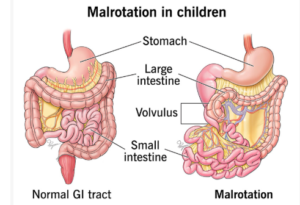
Intestinal malrotation is a by birth condition in which a baby’s small and large intestines do not settle in the normal position inside the abdomen. During early fetal development, the intestines form and rotate before attaching neatly to the abdominal wall. But in some cases, they don’t rotate properly and are not positioned at their right place in abdomen. This is called intestinal malrotation.
Symptoms and Causes
What are the signs and symptoms of malrotation?
Symptoms of malrotation vary depending on how severely the intestines are mispositioned and whether a twist, called volvulus, develops. The most common and alarming symptom in newborns is bilious vomiting, which appears greenish due to the presence of bile. Babies may also develop sudden abdominal pain, irritability, poor feeding, or a swollen abdomen. As the condition progresses, reduced blood supply to the twisted intestine can cause tissue damage, infection, or shock.
In older children, symptoms may be subtler and recurrent, including intermittent vomiting, chronic abdominal pain, constipation, diarrhea, or poor weight gain. Because symptoms can mimic other digestive problems, delayed diagnosis is not uncommon in such cases.
What causes intestinal malrotation?
Malrotation is a congenital condition, meaning a child is born with it. It does not develop later in life. The exact reason behind why the intestines fail to rotate properly is not fully understood, but it is believed to occur between the 5th and 10th week of pregnancy when the digestive system is forming. Both boys and girls can be affected, though it is more commonly detected in newborns and infants. In some cases, symptoms may not appear until later in childhood, and in rare cases, even adulthood.
Diagnosis and Tests
How is intestinal malrotation diagnosed?
Early diagnosis is critical in preventing complications. Pediatric surgeons and pediatricians usually rely on imaging tests such as abdominal X-rays, upper gastrointestinal contrast studies, or ultrasound to identify abnormal positioning or twisting of the intestine. If volvulus is suspected, immediate surgical intervention is required.
Management and Treatment
What is the treatment for intestinal malrotation in children?
Babies and children with malrotation typically need surgery to realign their intestines. Surgery is the primary treatment for malrotation.
Ladd’s procedure:
In this surgery, abnormal tissue bands are released and the intestines are repositioned to work more normally. It can be done through open or laparoscopic methods. While effective, there’s still a chance of the intestines twisting again (recurrent volvulus).
Kareem’s procedure:
This surgery rotates the intestines into their proper position and secures them to the abdominal wall, potentially reducing the risk of recurrent volvulus.
Outlook & Awareness
With early diagnosis and prompt treatment, most children with malrotation recover well and lead healthy lives. Awareness among parents and healthcare providers is key to catching symptoms early. Warning signs like greenish vomiting or recurrent abdominal pain should not be overlooked, as they may indicate intestinal twisting.
Can twisted intestines be prevented?
Malrotation and its main complication, volvulus, cannot be prevented because their cause remains unclear. However, seeking medical attention quickly can help avoid serious complications. If your child experiences persistent vomiting or unexplained discomfort, don’t assume it will resolve on its own — early evaluation and treatment make a big difference.
Frequently Asked Questions (FAQs)
1. Is malrotation dangerous?
Yes. Malrotation can lead to volvulus (twisting of the intestine), which can rapidly cut off blood supply and become life-threatening without emergency treatment.
2. What is the most important symptom to watch for?
Bilious (greenish) vomiting in infants or sudden abdominal pain — both are red-flag signs and need urgent medical attention.
3. How is malrotation diagnosed?
Doctors use imaging tests, especially an upper GI contrast study or ultrasound, to confirm abnormal intestinal positioning or twisting.
4. How is malrotation treated?
Surgery is the only treatment for malrotation. The Ladd’s procedure is most commonly performed for this.
5. Can it be prevented?
No. Malrotation can’t be prevented, but early recognition and rapid treatment significantly reduce complications and improve outcomes.